

Snoring is something many people experience, especially after a tiring day or during a bad cold. For some, it happens only occasionally, while others snore almost every night. But why does it happen? In simple terms, snoring occurs when air cannot move freely through the nose and throat while sleeping. The surrounding tissues may vibrate as air passes through, creating the familiar sound. While occasional snoring may not be a serious concern, regular or loud snoring can sometimes point to an underlying problem.
At Shifa Al Khobar, we often encourage people not to ignore persistent snoring, especially when it affects sleep quality or comes with other symptoms. Understanding the common causes can help you know when it may be time to speak with an ENT specialist.
Blocked or Narrow Nasal Passages

One of the common reasons people snore is difficulty breathing through the nose. A blocked nose caused by allergies, a cold, sinus problems, or nasal swelling can make breathing harder during sleep. When nasal breathing becomes difficult, a person may start breathing through the mouth, which can increase the chance of snoring.
Some people may also have a deviated nasal septum, where the wall between the nostrils is not straight. This can make one side of the nose narrower and may contribute to noisy breathing during sleep.
Sleeping Position Can Matter
The way you sleep can also influence snoring. Sleeping on your back may allow the tongue and soft tissues at the back of the throat to move toward the airway. This can reduce the space available for air to pass through and may lead to vibration.
Some people notice that their snoring becomes quieter when they sleep on their side. However, if snoring continues regardless of sleeping position, there may be another factor involved.
Being Overweight Can Increase the Risk
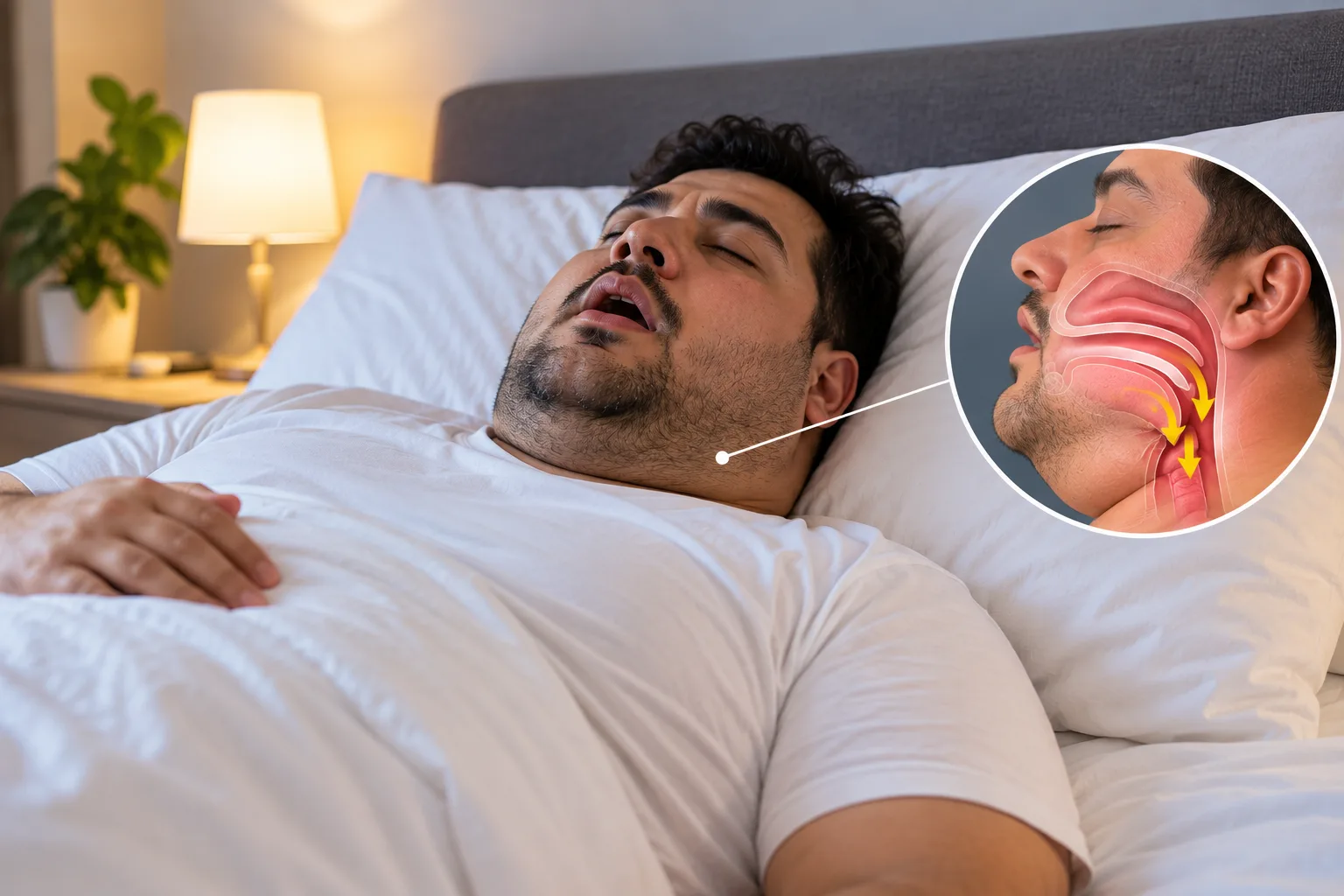
Extra tissue around the neck can place additional pressure on the airway. This may make the airway narrower while sleeping and increase the likelihood of snoring. This does not mean that every person who snores is overweight. People of different body types can snore for many different reasons.
Maintaining a healthy weight, staying physically active, and following healthy daily habits may help some people reduce snoring.
Alcohol and Certain Medicines
Alcohol can relax the muscles in the throat. When these muscles become more relaxed during sleep, the airway can become narrower, making snoring more likely. Taking alcohol close to bedtime may therefore make snoring louder.
Certain medicines that cause drowsiness or muscle relaxation can also influence breathing during sleep. If you notice changes in your snoring after starting a medicine, speak with your doctor rather than stopping it on your own.
Enlarged Tonsils or Other Throat Problems

The structure of the throat can also play a role. Enlarged tonsils or other tissues may reduce the space inside the airway. This can be particularly important in children, although adults can also experience airway narrowing due to different anatomical factors.
An ENT specialist can examine the nose and throat to identify structural problems that may be contributing to persistent snoring.
When Should You Consult an ENT Specialist?
Not every case of snoring requires medical treatment. However, regular and loud snoring deserves attention when it is accompanied by other symptoms.
You should consider consulting an ENT specialist if you frequently wake up feeling tired, experience morning headaches, have difficulty breathing through your nose, wake up gasping or choking, or if someone notices that you stop breathing during sleep.
These symptoms can sometimes be associated with obstructive sleep apnea, a sleep related breathing condition that should not be ignored. An ENT evaluation can help identify possible problems in the nose or throat and determine whether further testing is needed.
How Can Snoring Be Evaluated?

An ENT specialist may ask about your sleep habits, symptoms, medical history, and nasal breathing. The nose and throat may also be examined to look for swelling, obstruction, enlarged tissues, or structural concerns.
Depending on the symptoms, your doctor may recommend additional evaluation, including a sleep study. The right approach depends on the cause, so avoiding self diagnosis is important.
At Shifa Al Khobar, we understand that persistent snoring can affect both the person experiencing it and those sharing the same room. If your snoring is frequent, getting professional advice can help identify the possible cause and guide you toward appropriate care. Contact Shifa Al Khobar to schedule a consultation with our medical team and discuss your symptoms with an ENT specialist.