
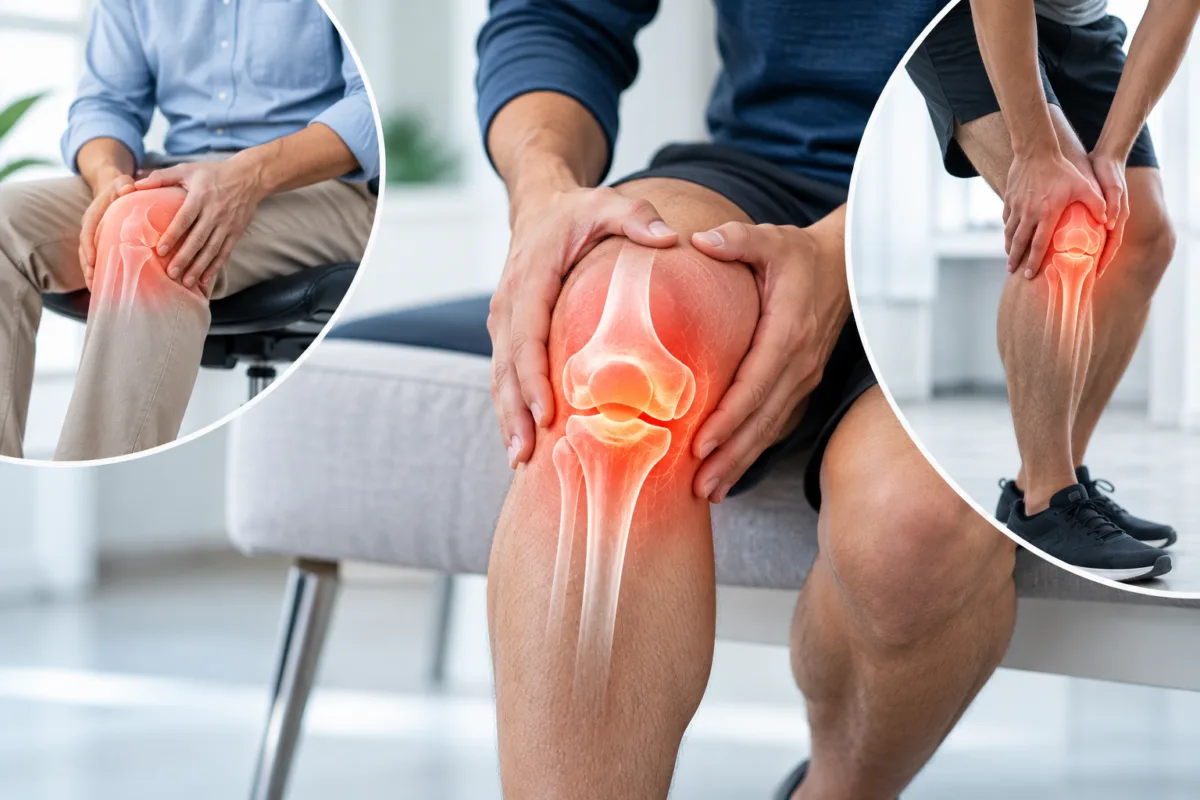
Knee pain can make simple daily activities surprisingly difficult. Sitting for a long time, getting up from a chair, standing for work, or walking around the house may become uncomfortable. If you regularly experience knee pain while sitting or standing, it is worth paying attention to what your body is telling you. At Shifa Al Khobar, we see patients with different types of knee problems, and understanding the possible causes can be the first step toward getting the right care.
Why Does Knee Pain Happen While Sitting?

Knee pain is not always caused by an injury. Sometimes, the position of the knee during sitting can put extra pressure on certain parts of the joint. Sitting with your knees bent for a long period may cause discomfort, especially if the muscles around the knee are weak or the joint is already irritated.
Patellofemoral pain is one possible reason. This happens when the kneecap does not move smoothly over the thigh bone. You may notice pain around or behind the kneecap when sitting for a long time. The discomfort may become more noticeable when you stand up after sitting.
Another possible cause is arthritis. When the cartilage inside the knee becomes worn, the bones may not move as smoothly as they should. Long periods of sitting can cause stiffness, making the first few movements uncomfortable.
Why Can Standing Cause Knee Pain?
Standing for a long time can increase the load placed on your knees. This may be more noticeable in people who have joint problems, previous injuries, muscle weakness, or excess pressure on the joints.
Osteoarthritis is a common cause of knee pain that may become worse after prolonged standing. Some people also experience swelling, stiffness, or difficulty moving the knee comfortably.
Muscle weakness can also contribute to the problem. The muscles around your thighs and hips help support the knee. When these muscles are not strong enough, the knee may take on more stress during everyday activities.
Previous Injuries Can Still Matter

An old knee injury may continue to affect the joint even after the original pain has disappeared. Injuries involving the ligaments, cartilage, or meniscus can sometimes lead to recurring discomfort.
You may notice the pain when changing positions, standing after sitting, climbing stairs, or putting weight on the affected leg. If you have previously injured your knee and the pain has returned, an evaluation can help identify what is happening.
Other Possible Causes of Knee Pain
Knee pain can have several causes, and symptoms can vary from person to person. Tendon problems may cause pain around the front of the knee, particularly when standing or moving after a period of rest.
Bursitis can also cause pain and tenderness around the knee. It may become uncomfortable when you put pressure on the joint or remain in one position for too long.
Sometimes, pain that feels like it is coming from the knee can be related to another area, such as the hip or lower back. This is why identifying the exact source of pain is important before deciding on treatment.
When Should You See a Doctor?

Occasional mild discomfort may improve with rest and simple changes to your routine. However, persistent or worsening knee pain should not be ignored.
You should consider medical attention if the pain continues for several weeks, affects your normal activities, causes significant swelling, or makes it difficult to walk or put weight on the leg. Sudden severe pain following an injury also deserves prompt medical assessment.
At Shifa Al Khobar, we can assess your symptoms, examine the affected joint, and recommend appropriate investigations when needed. Finding the underlying cause can help guide the right treatment and prevent the problem from becoming more difficult to manage.
If knee pain is making sitting, standing, walking, or everyday activities uncomfortable, contact Shifa Al Khobar to schedule a consultation with our medical team. We are here to help you understand your symptoms and receive appropriate care for your joint health.