

Seasonal changes can affect the body in ways that are easy to overlook. In Saudi Arabia, people experience very hot summers, cooler winters, dust, changing humidity, and occasional rain. Each change can influence hydration, skin, breathing, energy levels, sleep, and existing health conditions. At Shifa Al Khobar, we believe understanding these changes can help you take better care of your health throughout the year.
How Your Body Responds to Seasonal Changes

Your body constantly works to maintain a stable internal temperature. When the weather becomes very hot, the body produces sweat to cool itself. During colder weather, the body works to conserve heat. These natural responses are normal, but sudden or extreme weather conditions can place extra stress on the body. The Saudi Ministry of Health notes that different weather conditions can be linked with concerns such as dehydration, heat exhaustion, breathing difficulties, allergies, and other seasonal symptoms.
How Hot Weather Affects the Body
Summer in Saudi Arabia can bring intense heat, making hydration particularly important. Spending too much time outdoors in high temperatures can lead to heavy sweating and loss of fluids. Some people may experience tiredness, dizziness, headaches, muscle cramps, nausea, or weakness.
Heat exhaustion can happen when the body struggles to manage its temperature. The Saudi Ministry of Health recommends moving someone with heat exhaustion to a cooler place, loosening clothing, cooling the body, and encouraging fluids. Medical attention may be needed when symptoms are severe or continue.
During very hot days, we recommend drinking water regularly rather than waiting until you feel extremely thirsty. It is also helpful to limit prolonged exposure to direct sunlight and avoid strenuous outdoor activities during the hottest parts of the day.
What Happens During Cooler Months
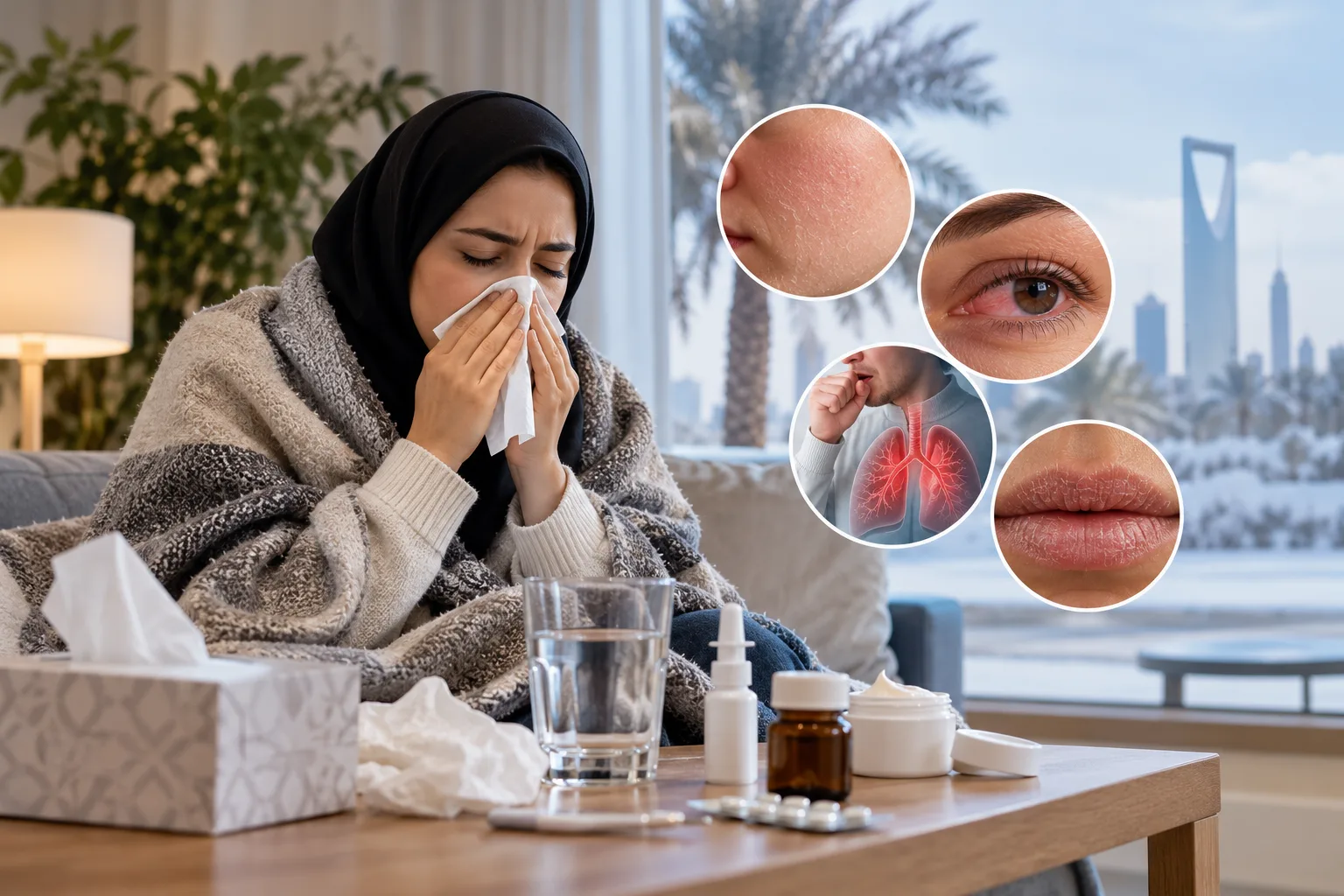
Winter brings a different set of challenges. Cooler and drier air can affect the skin, eyes, and respiratory system. The Saudi Ministry of Health explains that dry winter air can weaken the natural moisture barrier in the nose, mouth, and lungs, which may increase vulnerability to respiratory infections.
You may notice dry or itchy skin, chapped lips, irritated eyes, or increased coughing. People with asthma or other respiratory conditions may also find that cold, dry air makes their symptoms worse.
Keeping your home properly ventilated, drinking enough water, using moisturiser, and dressing appropriately can make the seasonal transition easier.
Dust and Changing Air Conditions
Dust is another environmental factor that people in Saudi Arabia may encounter. Dusty conditions can irritate the nose, throat, and eyes. People with allergies or respiratory conditions may notice more symptoms when air quality changes.
If you experience repeated coughing, wheezing, breathing difficulty, persistent congestion, or eye irritation, do not simply assume that the weather is the only reason. A medical evaluation can help identify the actual cause and determine whether treatment is needed.
Seasonal Changes and Existing Health Conditions
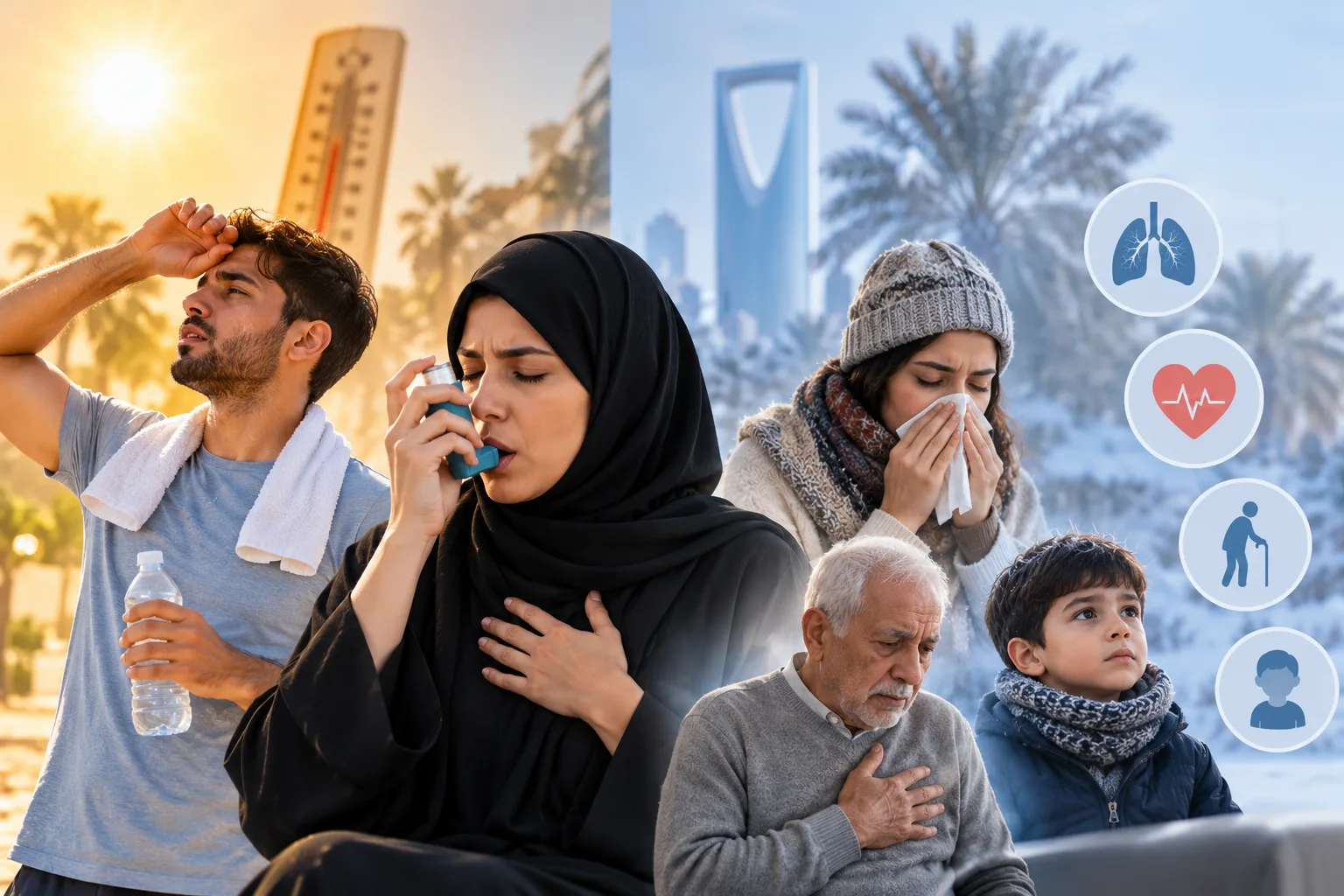
Weather changes can be more noticeable for people who already have health conditions. Cold weather may aggravate asthma symptoms, while extreme heat can increase the risk of heat related illness. People with chronic conditions, older adults, young children, and others who are more vulnerable may need extra care during periods of extreme weather.
This is why regular medical care matters even when you feel healthy. Monitoring your condition and following your doctor’s advice can help you respond appropriately when the weather changes.
Simple Ways to Stay Healthy Throughout the Year
A few everyday habits can make a meaningful difference. Drink enough water in both hot and cool weather. Eat balanced meals with fruits, vegetables, whole grains, and suitable sources of protein. Get enough sleep and remain physically active according to your health and fitness level.
Pay attention to unusual symptoms rather than ignoring them. If you have a chronic condition, continue taking prescribed medicines and speak with your doctor if your symptoms change with the seasons.
At Shifa Al Khobar, we encourage our community to take seasonal health seriously and seek medical advice when symptoms are persistent, unusual, or affecting daily life. If you have health concerns or would like professional guidance, contact Shifa Al Khobar and speak with our healthcare team. We are here to support your health through every season.