
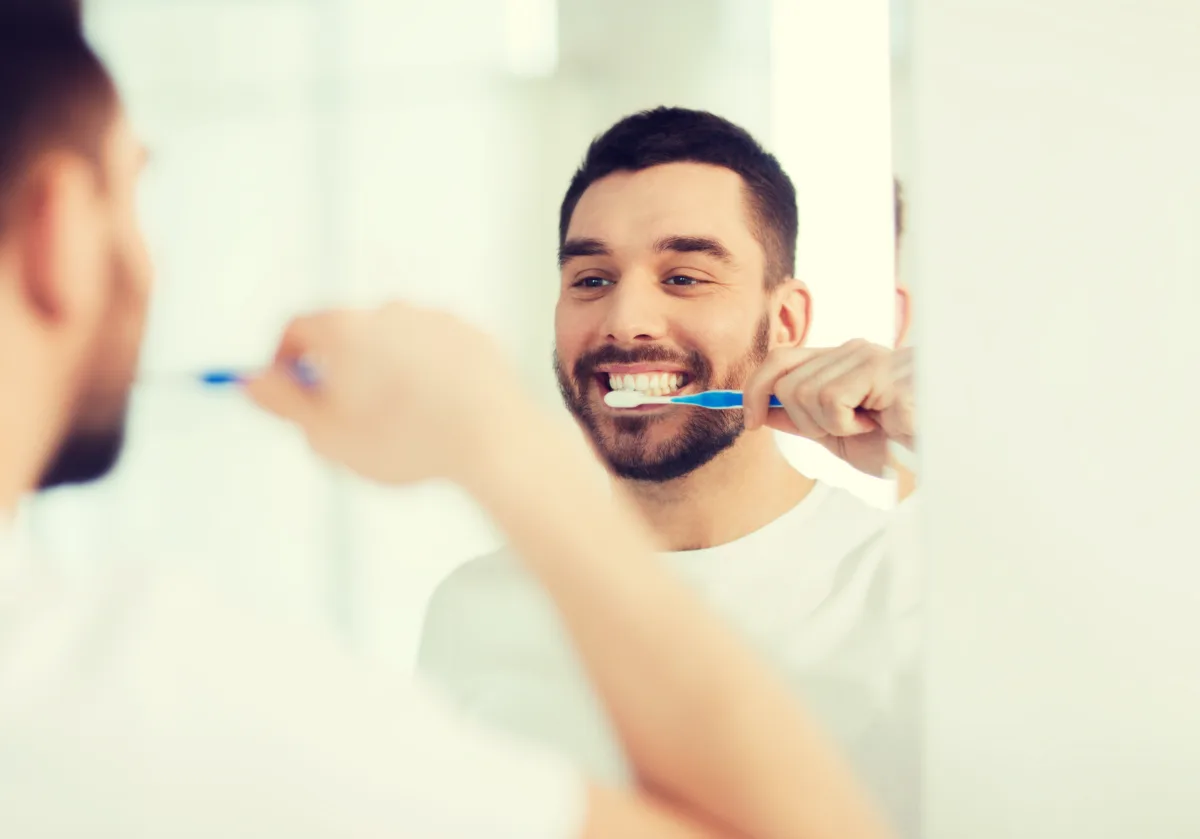
Most people assume that brushing harder means cleaner teeth. It feels more thorough, more satisfying. But at Shifa Al Khobar, we see the opposite problem walk through our doors almost every week: patients with receding gums, worn enamel, and sensitive teeth, all caused by brushing too aggressively. The frustrating part? They thought they were doing everything right.
Here is what you need to know about aggressive brushing and why gentler is almost always better.
What Does “Brushing Too Hard” Actually Mean?
 Brushing too hard does not just mean scrubbing with full force. It includes pressing the bristles flat against your teeth, using a back and forth sawing motion, brushing for too long with medium or hard bristles, and gripping your toothbrush like a tool rather than holding it lightly.
A common sign we notice during checkups? When a patient’s toothbrush looks worn and splayed after just a few weeks of use. That level of wear on bristles reflects the same pressure being applied to your teeth and gums.
The Real Damage Aggressive Brushing Causes
1. Gum Recession
Your gums are soft tissue and they do not grow back once they recede. Aggressive brushing gradually pushes them away from the tooth surface, exposing the sensitive root underneath. Over time, this creates gaps where bacteria collect easily, and the roots themselves become vulnerable to decay.
2. Enamel Erosion
Tooth enamel is the hardest substance in the human body, but it is not indestructible. Repeated abrasive brushing wears it down layer by layer. Once enamel is gone, it cannot regenerate. You are left with teeth that are more sensitive to hot and cold, more prone to staining, and more at risk for cavities.
3. Tooth Sensitivity
A lot of patients come to us complaining about sharp pain when they drink something cold or bite into something sweet. Quite often, aggressive brushing is the reason. When enamel wears away and gums recede, the dentin layer gets exposed. Dentin contains tiny channels that lead directly to the nerve, so temperature and pressure cause immediate discomfort.
4. Abrasion Notches on Teeth
Look at the area where your teeth meet the gum line. If you see small notches or grooves worn into the tooth surface, that is toothbrush abrasion. It is a direct physical sign of brushing damage and something we document carefully during dental exams.
How Hard Is Too Hard? A Simple Way to Tell
 The plaque is soft. It is a biofilm, not hardened cement. You do not need pressure to remove it; you need contact and movement. A toothbrush with soft bristles held at a 45 degree angle to the gum line and moved in small circular motions does the job well. The force you need is roughly what it takes to write lightly on paper.
If your arm is moving, you are working too hard. The wrist and fingers should be doing most of the work.
Choosing the Right Toothbrush Matters More Than You Think
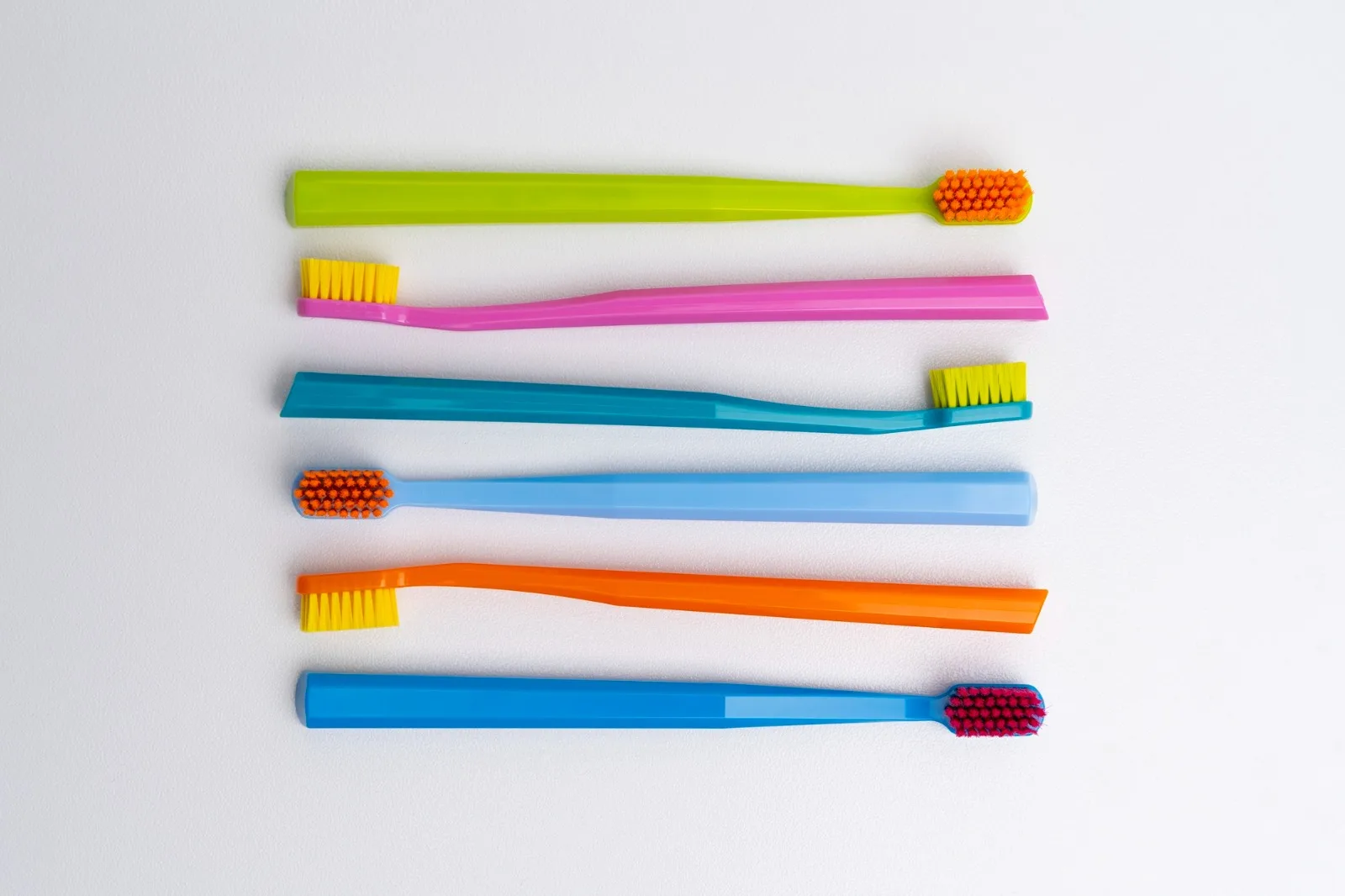 We recommend soft bristled toothbrushes to almost every patient we see. Medium and hard bristles are rarely necessary for everyday cleaning and carry a much higher risk of causing the damage described above.
Electric toothbrushes with pressure sensors are a good option for people who tend to press too hard. The brush does the movement for you and alerts you when you are applying too much force. Many patients find this genuinely helpful, especially in the beginning when they are trying to break an old habit.
Can the Damage Be Reversed?
This depends on how far things have progressed. Early gum recession can sometimes be managed and stabilized through proper technique and regular professional cleaning. More advanced cases may require a gum graft procedure to restore lost tissue. Enamel loss cannot be reversed, but it can be managed with desensitizing treatments, fluoride applications, and in some cases, composite bonding to protect exposed areas.
The earlier we catch it, the more options you have. That is why routine checkups matter, even when nothing seems wrong.
Talk to Our Team at Shifa Al Khobar
If your gums look like they are pulling back, if your teeth ache when you drink something cold, or if your toothbrush looks beaten up after just a few weeks, it is worth having a proper look. These are signs we take seriously because the longer brushing damage goes unaddressed, the harder it is to treat.
At Shifa Al Khobar, we do not just clean your teeth. We look at how you are caring for them at home and help you adjust where needed, without any judgment. Good dental habits are built over time, and we are here to support that process.
Book an appointment with us today. You can reach our clinic directly by phone, drop in during our working hours, or fill in the contact form on our website. We will take a close look at your gum health and enamel condition, and put together a care plan that works for you. Your teeth deserve proper attention, and we are ready to help.